
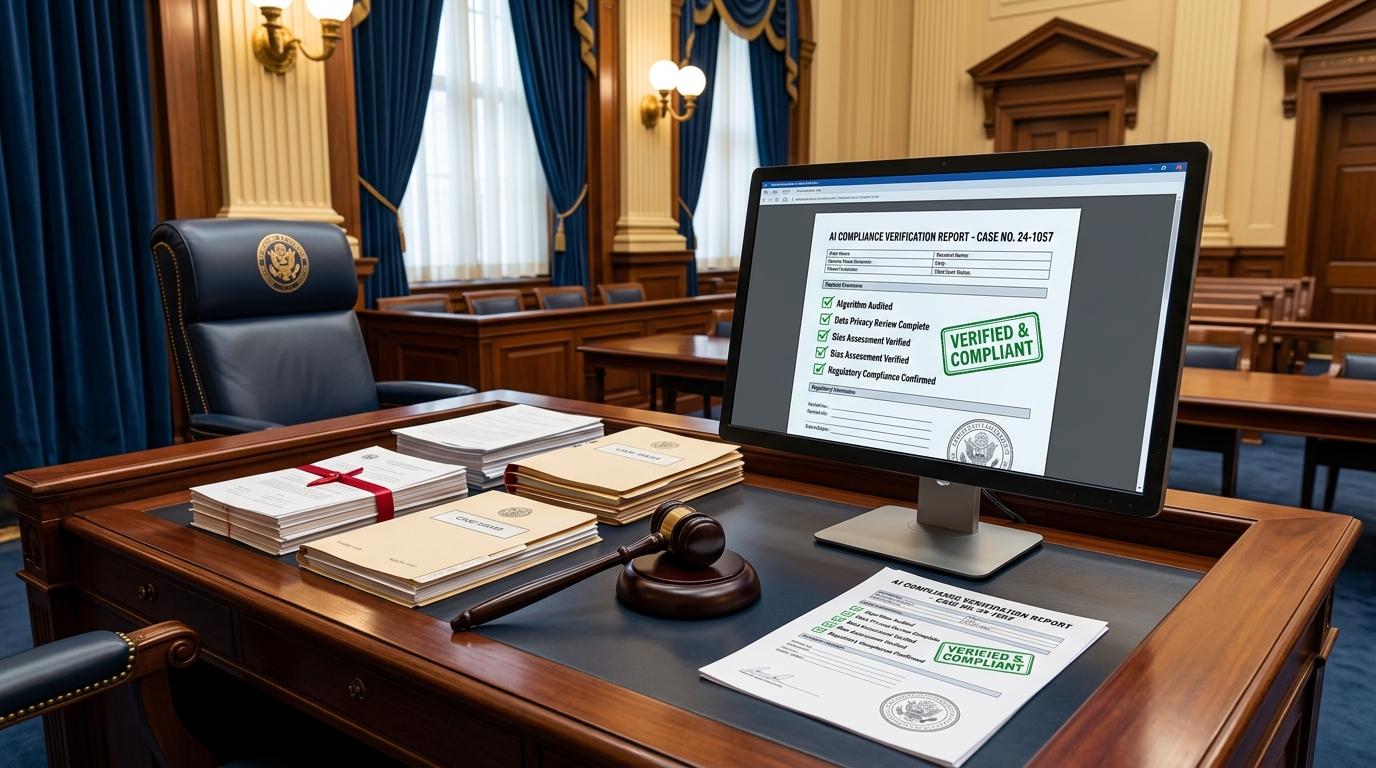
The Supreme Court’s Landmark Decision on AI-Generated Legal Documents
In a landmark 2026 decision, the Supreme Court addressed the admissibility and liability implications of AI-generated legal documents in federal court proceedings. The ruling, which has significant implications for how law firms can utilize artificial intelligence tools, establishes important standards for disclosure, verification, and attorney responsibility when using AI in legal work. This decision represents a watershed moment for AI adoption in legal practice, providing much-needed clarity while establishing new compliance obligations.
The case arose when a law firm submitted AI-generated legal briefs without disclosing their AI origin, and opposing counsel challenged the documents’ admissibility. The Supreme Court’s decision establishes that while AI-generated documents are generally admissible, attorneys have affirmative duties to verify AI-generated content, disclose material AI involvement, and ensure that AI tools do not compromise legal analysis quality or accuracy.
Key Holdings and Legal Principles
The Supreme Court’s decision establishes several important principles. First, AI-generated legal documents are admissible in federal court proceedings provided they meet applicable evidentiary standards. The Court rejected arguments that AI authorship automatically renders documents inadmissible, recognizing that AI tools can produce legally sound analysis.
Second, the Court established that attorneys have affirmative duties regarding AI-generated content. These duties include verifying that AI-generated citations are accurate, that legal analysis is sound, and that AI has not been used to circumvent professional responsibility obligations. Attorneys cannot simply accept AI-generated content without critical review and verification.

Disclosure Requirements
A particularly significant aspect of the ruling addresses disclosure requirements. The Court held that attorneys must disclose material AI involvement in legal work when disclosure is necessary to avoid misleading the court or opposing counsel. This does not require disclosure of every AI tool used in case preparation, but it does require disclosure when AI plays a central role in legal analysis or when the opposing party specifically inquires about AI usage.
The Court recognized that disclosure requirements must balance transparency with practical considerations. Requiring disclosure of every AI tool would be impractical, but allowing non-disclosure of material AI involvement would undermine professional responsibility. The Court’s approach requires attorneys to exercise professional judgment regarding what constitutes “material” AI involvement requiring disclosure.
Liability and Malpractice Implications
The ruling has significant implications for attorney liability. Attorneys remain responsible for all work product, including AI-generated content. If AI-generated analysis contains errors or omissions, the attorney is liable for those errors regardless of their AI origin. This principle means that using AI tools does not reduce attorney responsibility — it merely changes how that responsibility is discharged.
The Court specifically addressed the “hallucination” problem — where AI generates plausible-sounding but false information. Attorneys who fail to verify AI-generated citations or legal analysis and who rely on inaccurate AI output may face malpractice liability. This holding emphasizes the importance of verification procedures when using AI tools.
Implications for Law Firm AI Adoption
The Supreme Court’s decision provides important guidance for law firms considering or currently using AI tools. The ruling makes clear that AI adoption is permissible and can be beneficial, but it comes with important compliance obligations. Firms must implement procedures ensuring that AI-generated content is verified before use, that disclosure requirements are met, and that AI usage does not compromise professional responsibility obligations.
The decision also clarifies that firms cannot use AI to reduce costs by cutting corners on legal analysis. While AI can improve efficiency, it cannot be used as a substitute for attorney judgment and verification. Firms that attempt to use AI to reduce costs by eliminating verification procedures will face liability exposure.

Verification Procedures and Quality Control
In light of the Supreme Court’s decision, law firms should implement robust verification procedures for AI-generated content. These procedures should include attorney review of all AI-generated citations to verify they are accurate and properly describe case holdings. Legal analysis should be reviewed for soundness and completeness. Factual assertions should be verified against source documents.
Many firms are implementing tiered verification procedures based on the significance of AI-generated content. Minor research assistance might require less rigorous verification than AI-generated legal arguments. The key is ensuring that verification procedures are proportionate to the significance of the AI-generated content and the risks associated with errors.
Professional Responsibility and Ethical Obligations
The Supreme Court’s decision reinforces that professional responsibility obligations apply regardless of whether work is performed by attorneys or AI tools. Attorneys must provide competent representation, must maintain client confidentiality, and must avoid conflicts of interest. These obligations are not diminished by AI usage.
Confidentiality obligations deserve particular attention. Many AI tools store user inputs on cloud servers, potentially exposing confidential client information. Attorneys must carefully evaluate the privacy policies of AI tools before using them with sensitive client information. Some firms choose to use on-premises AI models or negotiate special data handling agreements with AI providers to protect confidentiality.

Competence and Continuing Education
The ruling also implies that attorneys have obligations to understand AI tools they use. This includes understanding AI capabilities and limitations, recognizing when AI might produce inaccurate results, and knowing how to verify AI-generated content. For many attorneys, this requires continuing education on AI tools and their appropriate use in legal practice.
Bar associations are increasingly addressing AI competence in continuing legal education requirements. Attorneys should take advantage of these educational opportunities to develop competence in AI tool usage. This education should cover both the capabilities of specific AI tools and the ethical obligations associated with AI usage.
Impact on Legal Technology Development
The Supreme Court’s decision will likely accelerate development of legal-specific AI tools. General-purpose AI tools like ChatGPT and Claude are useful for legal work, but legal-specific tools designed with built-in verification procedures and compliance safeguards will likely become increasingly popular. These specialized tools may incorporate features that reduce hallucination rates, provide source citations, and include audit trails documenting AI usage.
Legal technology startups are already responding to the decision by developing AI tools specifically designed for legal applications with built-in compliance features. These tools will likely become increasingly sophisticated and specialized, providing better performance for legal tasks while incorporating professional responsibility safeguards.
Practical Guidance for Law Firms
In light of the Supreme Court’s decision, law firms should take several practical steps. First, audit current AI tool usage to ensure compliance with the Court’s requirements. Evaluate whether disclosure requirements have been met and whether verification procedures are adequate.
Second, develop clear policies addressing AI tool usage. These policies should specify which AI tools are approved for use, how they can be used, what verification procedures are required, and when disclosure is necessary. Train attorneys on these policies and on the Supreme Court’s decision.
Third, implement robust verification procedures for AI-generated content. These procedures should be documented and consistently applied. Consider implementing tiered verification based on the significance of AI-generated content.
Conclusion
The Supreme Court’s 2026 decision on AI-generated legal documents provides important guidance for law firms adopting AI tools. The ruling makes clear that AI usage is permissible but comes with important compliance obligations. Attorneys must verify AI-generated content, disclose material AI involvement, and ensure that AI usage does not compromise professional responsibility obligations.
By understanding the Court’s decision and implementing appropriate compliance procedures, law firms can leverage AI tools effectively while managing liability exposure. The key is viewing AI as a tool that augments attorney judgment rather than replaces it, and maintaining rigorous verification procedures to ensure accuracy and compliance.
For more information on AI in legal practice, explore the Legal Technology category on Legal Industry Roundup. For additional court decision analysis, review the Court Decisions category.