
The Evolution of Work in Legal Practice
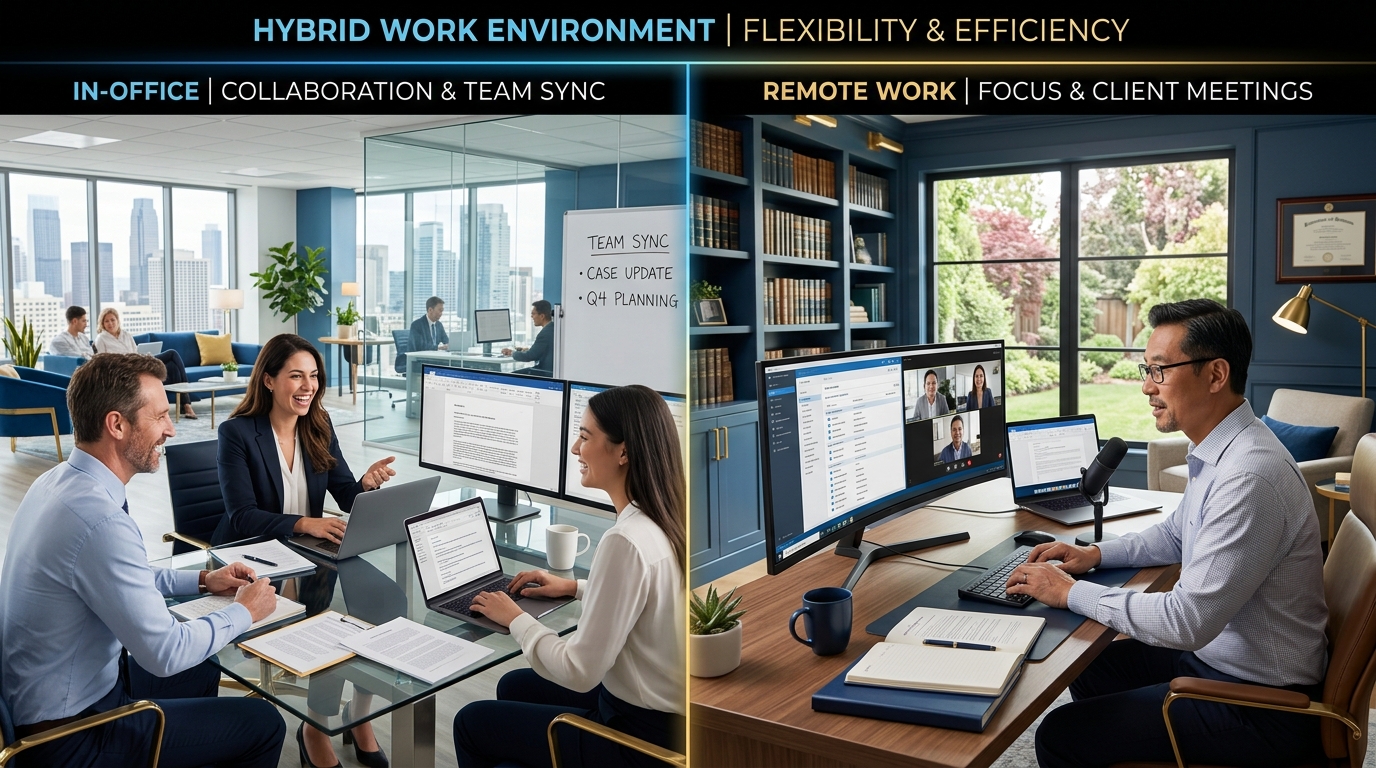
The hybrid work model has become the standard operating environment for law firms in 2026. The pandemic accelerated adoption of remote work, and firms discovered that many attorneys and staff could work effectively from home. However, the transition from fully remote work back to office-based work proved more complex than anticipated. Most firms have settled on hybrid models where attorneys and staff work both remotely and in-office, creating new management challenges and opportunities.
The hybrid law firm model offers significant advantages — increased flexibility attracts and retains talent, reduces real estate costs, and can improve work-life balance. However, hybrid work also creates challenges around collaboration, firm culture, client service, and performance management. Successful firms are those that have thoughtfully designed hybrid policies and implemented systems to support distributed teams effectively.
Designing Your Hybrid Work Policy
Successful hybrid work begins with clear policies defining expectations for remote and in-office work. These policies should specify how many days per week attorneys and staff are expected to work in-office, which roles require in-office presence, and how flexibility is managed. Clear policies reduce confusion and ensure consistent application across the firm.
Most successful firms use a tiered approach, with different policies for different roles. Client-facing attorneys might be required to work in-office more frequently than research attorneys. Administrative staff might have different requirements than attorneys. The key is ensuring that policies support client service, collaboration, and business objectives while providing flexibility that attracts and retains talent.

Flexibility and Trust-Based Management
Firms that successfully implement hybrid work tend to emphasize flexibility and trust-based management rather than rigid rules. Rather than tracking hours or requiring specific days in-office, these firms focus on outcomes and results. Attorneys are trusted to manage their time effectively, provided they meet client needs and firm expectations.
This approach requires different management skills than traditional office-based management. Managers must focus on results rather than presence, must communicate expectations clearly, and must build trust with their teams. However, research shows that trust-based management leads to higher employee satisfaction and retention, making the investment worthwhile.
Technology Infrastructure for Distributed Teams
Effective hybrid work requires robust technology infrastructure. Cloud-based practice management systems, secure file sharing, video conferencing tools, and collaboration platforms are essential. These technologies enable attorneys and staff to work effectively from anywhere while maintaining security and confidentiality.
Cybersecurity is particularly important for remote work. Firms must ensure that remote workers can access systems securely, that client data is protected, and that firm networks are not compromised by remote access. This typically requires VPN access, multi-factor authentication, and regular security training for remote workers.

Communication and Collaboration Tools
Effective communication is essential for distributed teams. Video conferencing tools enable face-to-face meetings that build relationships and improve communication. Instant messaging platforms facilitate quick questions and informal communication. Project management tools help teams coordinate work and track progress. The key is selecting tools that integrate well with your existing systems and that your team will actually use.
Many firms struggle with tool proliferation — having too many communication platforms creates confusion and reduces effectiveness. Select a core set of tools that meet your needs and encourage consistent usage. Train team members on effective use of these tools, including guidelines for when to use email, instant messaging, or video calls.
Maintaining Firm Culture and Collaboration
One significant challenge of hybrid work is maintaining firm culture and fostering collaboration. In-office work naturally facilitates informal interactions, mentorship, and relationship building. Remote work can create silos where attorneys work independently without sufficient collaboration or mentorship.
Successful firms address this challenge through intentional design. Regular in-office days create opportunities for collaboration and relationship building. Team meetings, firm events, and social activities help maintain culture. Mentorship programs ensure that junior attorneys receive guidance despite not being in-office daily. The key is recognizing that culture requires intentional effort in hybrid environments.

Mentorship and Professional Development
Professional development and mentorship are particularly important in hybrid environments. Junior attorneys need guidance and feedback to develop professionally. Remote work can make this guidance harder to provide informally. Firms should establish formal mentorship programs, regular feedback sessions, and professional development opportunities that work in hybrid environments.
Some firms schedule regular in-office days for junior attorneys to work alongside senior attorneys, facilitating mentorship. Others use video calls for mentoring sessions. The key is ensuring that remote work does not disadvantage junior attorneys in terms of professional development and career advancement.
Client Service and Relationship Management
Hybrid work requires careful attention to client service. Clients expect to reach their attorneys when needed and may have concerns about remote work affecting service quality. Clear communication with clients about your firm’s work arrangements helps manage expectations. Ensuring that client-facing attorneys are available during client business hours, whether in-office or remote, is essential.
Many firms find that certain client interactions benefit from in-person meetings. Initial client meetings, complex negotiations, and trial preparation might require in-office presence. Firms should schedule in-office days to accommodate important client meetings and ensure that client service is not compromised by remote work arrangements.
Productivity and Performance Management
Managing productivity in hybrid environments requires different approaches than traditional office management. Time tracking and presence monitoring are less effective and can damage trust. Instead, focus on outcomes and results. Set clear expectations for work product, client service, and billable hours. Track performance through these metrics rather than through presence or hours logged.
Regular check-ins with team members help ensure that remote workers are productive and engaged. These conversations should focus on work progress, challenges, and support needed. Managers should be alert to signs that remote workers are struggling — isolation, disengagement, or difficulty with work-life balance — and should be prepared to provide support.
Real Estate Strategy and Cost Management
Hybrid work has significant implications for real estate strategy. Firms no longer need office space for every employee to work simultaneously. Many firms have reduced office space, downsized to smaller locations, or eliminated private offices in favor of flexible workspace. These changes can significantly reduce real estate costs while maintaining adequate space for collaboration and client meetings.
However, firms must ensure that office space remains attractive and functional. Poorly designed office space that lacks amenities or adequate collaboration areas will not attract employees to work in-office. Investment in office design and amenities — including comfortable meeting spaces, quiet work areas, and social spaces — helps ensure that office space is valued by employees.
Conclusion
The hybrid law firm model is here to stay. Firms that successfully implement hybrid work will gain competitive advantages in talent attraction and retention, cost management, and flexibility. Success requires clear policies, robust technology infrastructure, intentional culture building, and management approaches that emphasize trust and outcomes.
The transition to hybrid work is not simple, and firms will continue refining their approaches as they gain experience. By learning from other firms’ experiences and remaining flexible, your firm can develop a hybrid model that works for your specific circumstances and culture.
For additional insights on practice management strategies, explore the Practice Management category on Legal Industry Roundup. For information on technology tools supporting remote work, review the Legal Technology category.